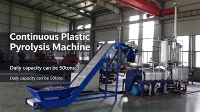
Brief Introduction to Plastic Pyrolysis Plant
A plastic pyrolysis plant is an industrial facility that utilizes thermal pyrolysis technology to break down the large polymer chains found in waste plastics (such as PE, PP, and PS) within a high-temperature environment-characterized by an absence or severe lack of oxygen-and crack and recombine them into small-molecule hydrocarbons.
Core working principle of Plastic Pyrolysis Plant
This equipment does not simply "incinerate" the material; instead, it utilizes thermal pyrolysis. The standard process comprises four main stages:
1. Feeding and Pre-treatment Stage:
Pre-treatment: Mixed waste plastics undergo sorting (to remove materials unsuitable for direct pyrolysis, such as PVC and PET) and shredding into 3–5 cm particles, followed by washing and drying (to reduce moisture and ash content).
Feeding: A screw conveyor or hydraulic pusher system is used to feed the pre-treated plastic-either continuously or intermittently-into a sealed reactor.
2. Pyrolysis Reaction Stage (Core Process):
The reactor is heated to a reaction temperature of 350°C–550°C in an oxygen-free environment.
At this temperature, the large plastic molecules undergo chain-scission reactions (breaking of C-C bonds) and are converted into gaseous hydrocarbons.
3. Gas-Solid Separation and Condensation Stage:
The high-temperature mixed oil-gas generated during pyrolysis first enters a gas-solid separation system (cyclone separator) to remove entrained carbon black dust and catalyst powder.
Subsequently, the mixed gas enters a multi-stage condensation and cooling system (typically water-cooled or cryogenic), where the oil-gas is condensed into a liquid-specifically, plastic pyrolysis oil (fuel oil).
4. Non-condensable Gas Recovery and Residue Discharge Stage:
The uncondensed gas (comprising mainly methane, ethane, hydrogen, and small amounts of C3–C4 light hydrocarbons) possesses high calorific value. After passing through a "water seal" safety device, it is piped back to the heating furnace to serve as fuel for combustion, thereby supplying heat to the reactor and significantly reducing external fuel consumption.
Upon completion of pyrolysis, the solid residue-carbon black-is discharged via a water-cooling or sealed discharge system.

Key Deliverables and Application Areas
The proportions of pyrolysis products vary depending on the feedstock; typical yields are as follows:
Plastic pyrolysis oil: The highest-value product.
Applications: Can be used directly as industrial fuel (for boilers, ceramic kilns, and glass melting furnaces); alternatively, after hydro-refining (decolorization, desulfurization, and denitrification), it can be blended into non-standard diesel or light fuel oil.
Carbon black: The solid carbonaceous residue remaining after pyrolysis.
Applications: Low-grade material can partially replace industrial carbon black (as filler for running tracks, low-quality rubber, and recycled plastic pellets); high-grade material, after grinding and modification, is used in inks and coatings.
Non-condensable gas:
Applications: 100% recycled for combustion to provide clean energy for heating the equipment itself, achieving energy self-sufficiency.
Trace residues (depending on impurities in the feedstock):
Applications: Ash and slag containing heavy metals require landfilling or solidification treatment.

Oil Yield Of Waste Plastic
|
PE |
50%-75% |
|
PP |
50%-75% |
|
PS |
50%-75% |
|
ABS |
40% |
|
Leftovers of paper |
Wet 15-20%, dry 60% |
|
House garbage |
35-50% |
|
Plastic cable |
80% |
|
Plastic bag |
50% |
|
Submarine cable |
75% |
|
Rubber cable |
35% |
|
Sole |
30% |
|
Big tires |
45-50% |
|
Small tires |
35-40% |
|
PVC |
Not available |
|
PET |
Not available |
Features
1) High safety factor: double oil and gas pipes, safety water seal, safety valve, alarm system
2) Environmental protection: automatic rear slag discharge, good sealing and zero pollution
3) Cooling is more thorough: water tank type cooling, "S" shape, double oil and gas pipes
Success Case

Delivery

F&Q
1: Can the Plastic Pyrolysis Plant process PVC and PET?
A: They absolutely cannot be processed in large quantities directly. PVC contains chlorine; at high temperatures, it generates hydrogen chloride gas, which severely corrodes the heating furnace and condenser and contaminates the oil with chlorine, rendering it unsuitable for use as fuel. Although PET is chlorine-free, it has a high oxygen content; pyrolysis produces strongly acidic substances (such as benzoic acid) that severely clog pipelines and reduce the oil's calorific value. It is recommended to strictly remove these materials during the pre-treatment stage.
2: The Plastic Pyrolysis Plant is prone to "coking and carbon buildup" during long-term operation; how can this be resolved?
A: Coking is an inherent issue with pyrolyzers. Solutions include: installing a coke-removal device inside the pyrolysis reactor; or scheduling periodic shutdowns for manual coke removal and/or adding specific catalysts to inhibit coke formation.
3: Can the equipment's tail gas emissions meet environmental standards?
A: It is technically feasible, though costly. Although the pyrolysis process itself is oxygen-free, the combustion of non-condensable gases in the heating furnace still generates flue gas. Consequently, the system must be equipped with desulfurization, denitrification, and dust removal units.
4: How much does the "oil yield" vary depending on the feedstock?
A: The differences are significant. Clean PE and PP offer the highest oil yields (up to 70%–80%); clean PS yields are moderate (60%–65%); whereas mixed municipal plastic waste or industrial residues-due to high levels of impurities, ash, and moisture-may yield as little as 30%–40% oil.
Hot Tags: Plastic Pyrolysis Plant, China Plastic Pyrolysis Plant manufacturers, suppliers, factory