


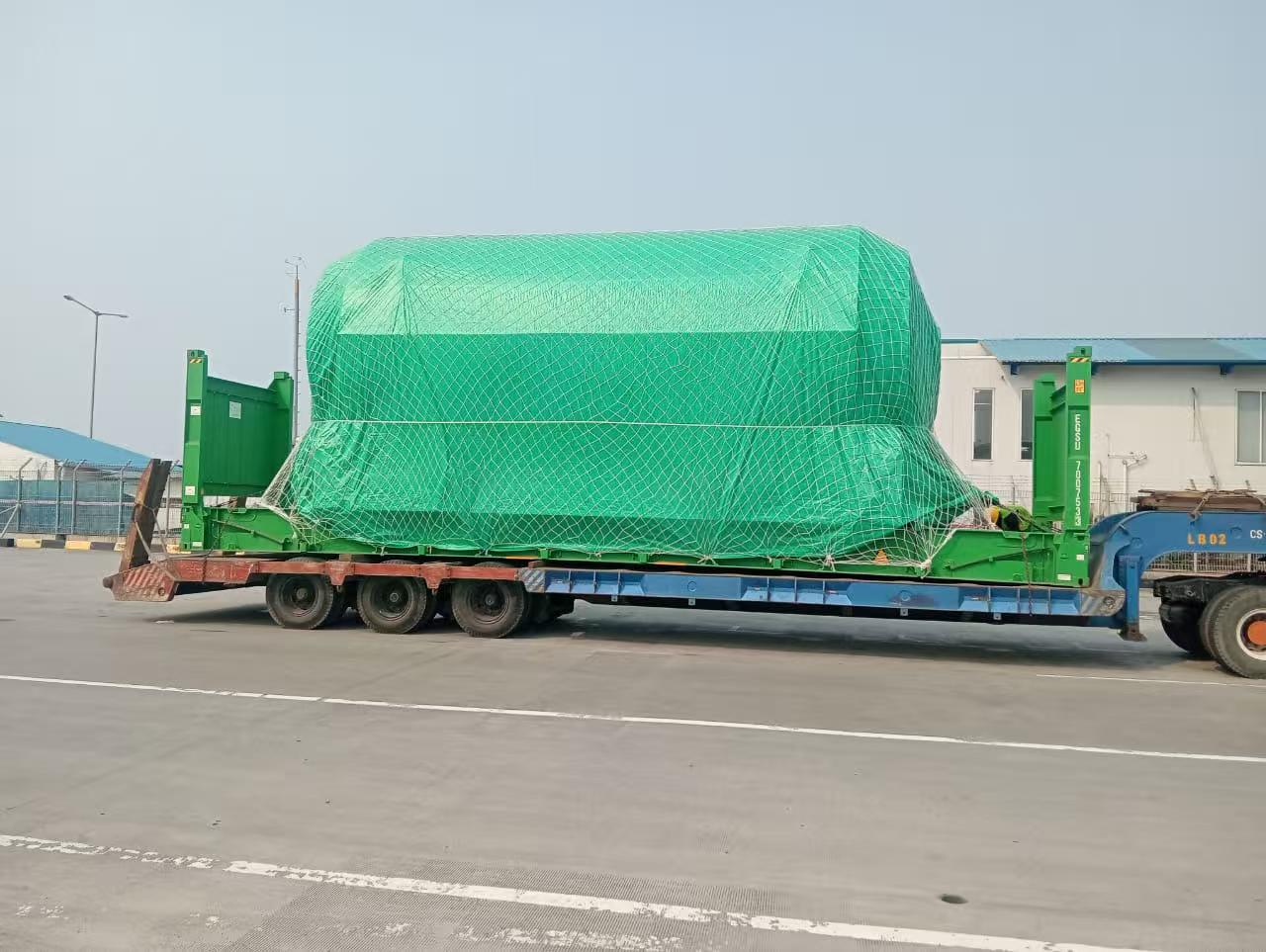
In June 2026, Xinxiang City Jinzhen Machinery Equipment Co., Ltd. completed the loading and shipment of four sets of 15TPD semi-continuous rubber powder pyrolysis plants.
bound for a client in Indonesia. The shipment marked the transition from fabrication to on-site delivery, and the project itself reflects a trust story built on proven performance rather than
catalogue promises.

This case outlines how the client moved from cautious comparison to a four-line order, what specific process concerns drove the configuration, and how Jinzhen's semi-continuous design.
addressed the operational realities of rubber powder pyrolysis.
The Indonesian client began searching for semi-continuous pyrolysis equipment in early February 2026, aiming to process rubber powder at a stable daily capacity. During the initial
evaluation stage, the client compared multiple manufacturers but remained cautious about machine quality and long-term reliability-a reasonable posture given the capital intensity
and continuous-operation demands of pyrolysis plants.
What shifted the trajectory was a referral. The client was introduced to an existing Jinzhen user in Shandong Province, China, who had been operating a Jinzhen pyrolysis line comprising.
16 sets of waste tyre pyrolysis machines with excellent results. That reference customer spoke positively about build quality, stability, and after-sales support. Based on that recommendation,
the Indonesian client contacted the Jinzhen factory directly in mid-March 2026, visited the manufacturing facility, reviewed the semi-continuous process in detail, and placed the order within a
short period.
The final scope was confirmed as four sets of 15TPD semi-continuous rubber powder pyrolysis plants, aligning with the client's original processing vision.
These four lines were not off-the-shelf batch systems adapted for rubber powder. Jinzhen configured each line around three operational pain points that matter in semi-continuous rubber
powder pyrolysis: feeding consistency, reactor wall coking, and slag discharge efficiency.
Rubber powder tends to adhere to reactor walls during pyrolysis. If left unaddressed, coking reduces heat-transfer efficiency, shortens reactor service life, and increases downtime for
cleaning. Each semi-continuous reactor in this project was equipped with an internally developed anti-coking device, designed to prevent rubber powder from sticking to the reactor wall.
and to extend the reactor's service life. This is a customization detail that rarely appears in standard semi-continuous quotations, but it directly affects long-term operating cost.
At the discharge end, all four production lines share one cooling scraper conveyor for carbon black transport. This configuration allows simultaneous high-temperature slag discharge
from multiple units, reducing both time and operating cost. The closed design also prevents carbon black dust from escaping into the workshop-an important consideration for
environmental compliance and worker safety.
This shared-discharge arrangement is particularly practical for a four-line project: instead of duplicating cooling and conveying equipment for each reactor, the client gains a compact,
centralized discharge point without sacrificing throughput per line.
Three factors converged in the decision:
The Shandong reference customer was not a sales reference-it was an operator running 16 Jinzhen pyrolysis machines. That kind of peer validation carries more weight in the pyrolysis
equipment sector than brochures or factory showroom visits alone.
The client visited Jinzhen in mid-March 2026 and witnessed manufacturing capabilities firsthand before discussing continuous pyrolysis process details. This step mattered because
Semi-continuous equipment involves more integration complexity than batch systems, and buyers need to see fabrication quality and assembly discipline directly.
The client was not buying "a pyrolysis plant" in the abstract-they were buying four lines configured for rubber powder, with sealed feeding, anti-coking protection, and a shared discharge
strategy. The final scope mirrored the original processing vision rather than pushing the buyer toward a larger or different system.
From May 29 to June 3, 2026, Jinzhen completed loading and shipment of the four semi-continuous rubber powder pyrolysis lines.
For multi-line projects, the on-site phase is where semi-continuous design choices pay off. Shared discharge infrastructure reduces the number of transfer points to install; sealed.
feeding simplifies material handling integration; and the anti-coking design lowers the frequency of early-stage reactor cleaning during the critical first production cycles.
Since the equipment arrived in Indonesia, Jinzhen technicians have been on site guiding the installation work. At this stage, the overall equipment connection has been basically completed,
and the project is moving into the commissioning phase.
Commissioning will focus on verifying the integrated operation of the four lines-including sealed screw feeding, reactor operation, anti-coking performance, and the shared cooling
scraper conveyor for carbon black discharge-so that the system can transition smoothly toward trial production.
This Indonesia project did not hinge on a lower price or a faster delivery promise. It moved forward because an existing operator's 16-machine experience gave the client a performance.
baseline, a factory visit confirmed fabrication capability, and the four-line configuration was built around the specific behavior of rubber powder inside a semi-continuous reactor.
For buyers evaluating semi-continuous pyrolysis equipment, the practical takeaway is straightforward: ask for operating references, inspect the reactor and discharge design in person,
and insist that the configuration reflect your feedstock-not a generic catalogue specification.
Xinxiang City Jinzhen Machinery Equipment Co., Ltd. has been manufacturing waste tyre, rubber, and plastic pyrolysis equipment since 2007 and offers batch, semi-continuous, and
continuous configurations for different capacity and automation requirements. For project-specific inquiries, please contact our team with your feedstock type, target daily capacity, and
site conditions.