


Waste Engine Oil Recycling To Diesel Machine
The waste engine oil to diesel recycling machine is an industrial unit that converts raw materials-such as waste engine oil-into non-standard diesel fuel through a catalytic pyrolysis process. The resulting non-standard diesel (commonly known as "fuel oil") is suitable for use in tractors, trucks, ships, diesel generator sets, construction machinery, and industrial boilers; it offers advantages such as high calorific value, efficient combustion, and low cost.
Working principle
The core principle of this equipment involves utilizing the differences in boiling points among various hydrocarbon components in waste engine oil to perform fractional distillation under vacuum heating; subsequently, catalytic cracking breaks down long-chain macromolecules into short-chain molecules suitable for diesel combustion; finally, refining and decolorization processes yield compliant non-standard diesel.
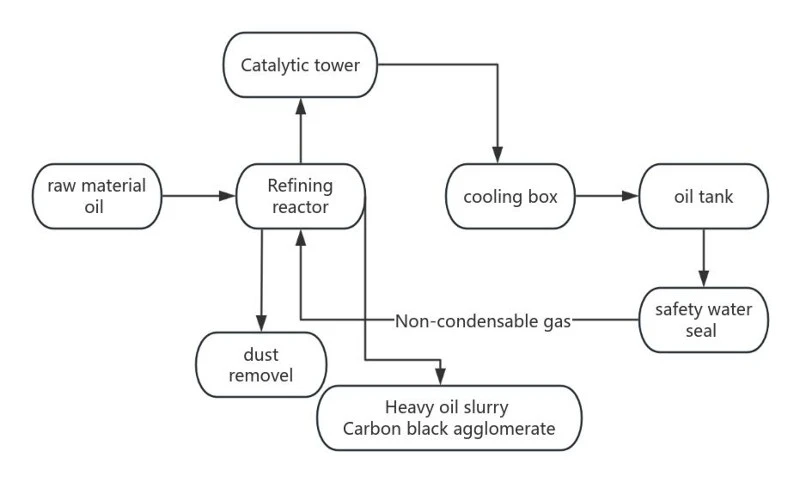
The waste engine oil is recycled to the diesel machine as follows:
- The pretreated waste oil is fed into a refining reactor and heated to 180-360℃ for distillation:
- Below 180℃: Light hydrocarbons (similar to gasoline) are separated.
- 180-360℃: Diesel fraction is separated.
- The oil gas produced during refining is liquefied by a condenser, separating diesel, light oil, and other light oils.
- Non-condensable gases are recovered via a water-sealed system and returned to the heating furnace as fuel.
The refining residue can be used as a modified asphalt feedstock.
Components of the Waste Engine Oil Recycling To Diesel Machine
This equipment consists of the following seven major systems:
1. Heating and Refining Unit
Hot blast stove or thermal oil heater
Distillation still
Vacuum pump and vacuum buffer tank
3. Catalytic Cracking Unit
Catalytic tower
4. Condensing and Collection Unit
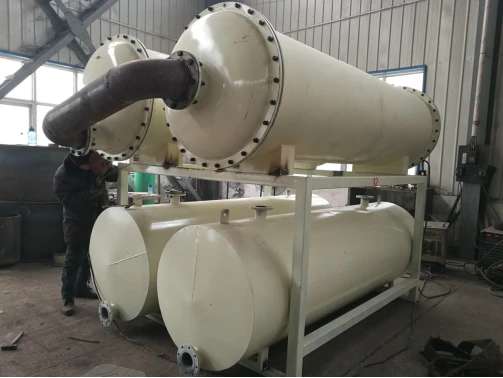
Shell-and-tube water-cooled condenser
Oil-water separator
Intermediate oil storage tank
5. Refining and Decolorization Unit
6. Energy Recovery and Tail Gas Treatment Unit
Non-condensable combustible gas recovery piping and burner
Water-seal flashback arrestor
7. Automatic Control System
Control cabinet (touchscreen operation)
Multi-point thermocouple temperature sensors
Pressure transmitters and level controllers
Automatic alarm and interlock protection system
the final products of the Waste Engine Oil Recycling To Diesel Machine
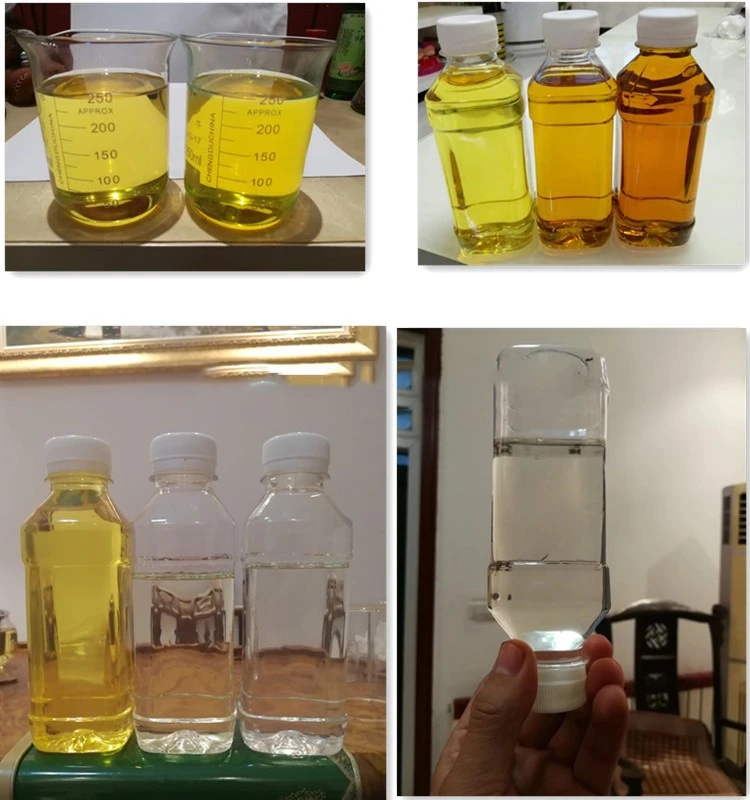
Non-standard diesel: Ranges in color from pale yellow to amber; suitable for general industrial combustion and use in low-speed diesel engines.
Non-condensable combustible gas (recycled for combustion): Can be returned to the refining reactor to provide heat;
Waste residue (asphaltenes): Can be used for road paving;
The final non-standard diesel oil's picture is as follows:
Parameter
|
NO |
ITEM |
Parameter |
|
1 |
Suitable Raw Material |
Waste engine oil, pyrolysis fuel oil, crude oil |
|
2 |
Structure |
Continuous Vertical |
|
3 |
Chamber Material |
Q245R boiled steel,Q345R boiled steel,SUS 310S |
|
4 |
Daily Capacity (24H) |
20 MT |
|
5 |
Condensers |
Q235B |
|
6 |
Oil Output |
20% Gasoline,60% diesel oil,15% heavy oil |
|
7 |
Fuels Choice |
Oil, gas, coal, electricity |
|
8 |
Power |
70kw/h |
|
9 |
Cooling Method |
Cycle Water(300M3) |
|
10 |
Delivery Time |
1 month |
|
11 |
Type of Installation |
With foundation |
|
12 |
Installation Area (m) |
25m*7m*8m |
|
13 |
Installation & Commissioning Time |
3month |
|
14 |
Noise dB(A) |
≤85 |
|
15 |
Operating Mode |
Continuous |
|
16 |
Sync Gas Treatment |
Fully burned as fuel |
|
17 |
Manpower |
3~4 per shift |
The details infomation of the machine
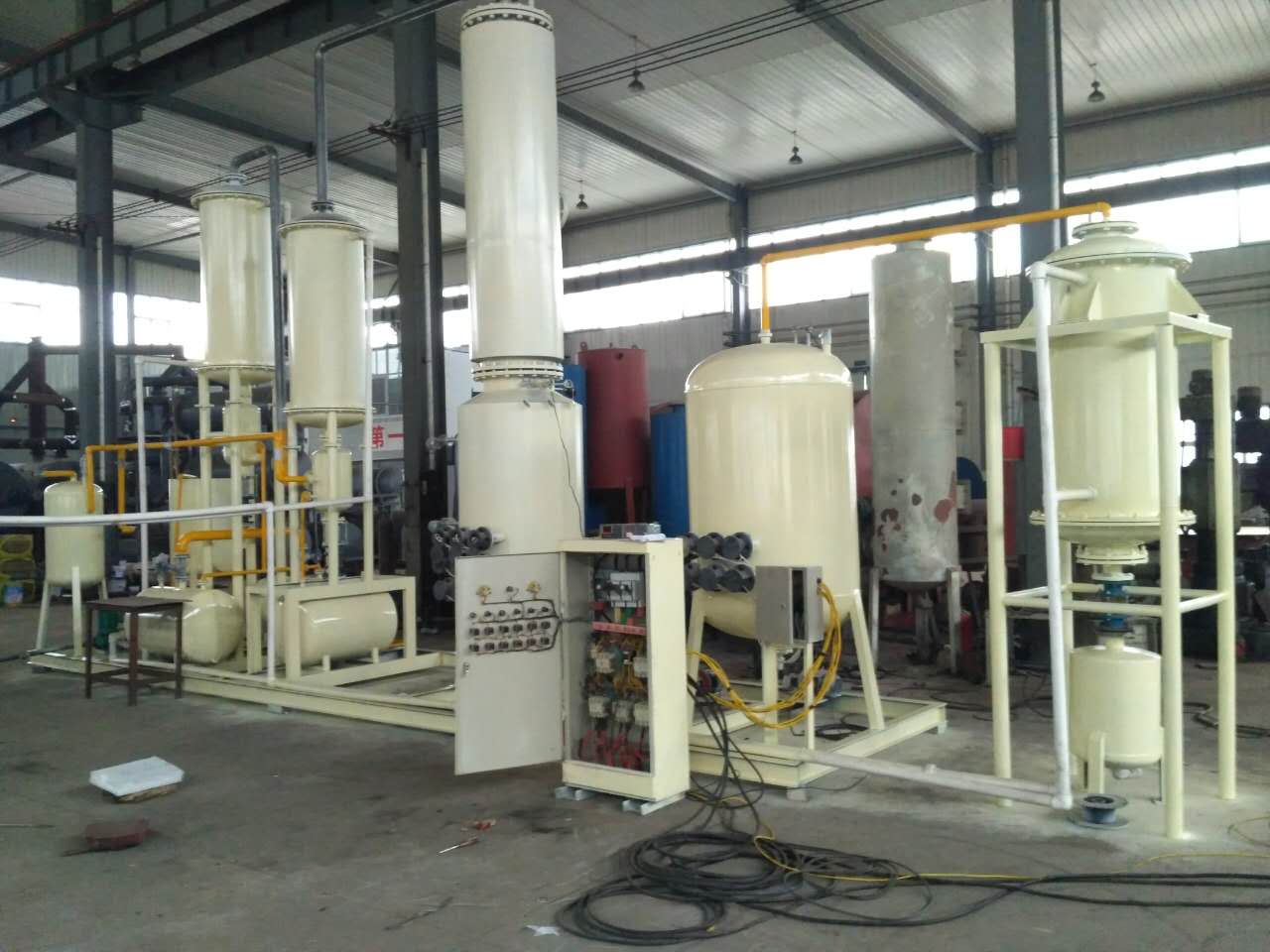
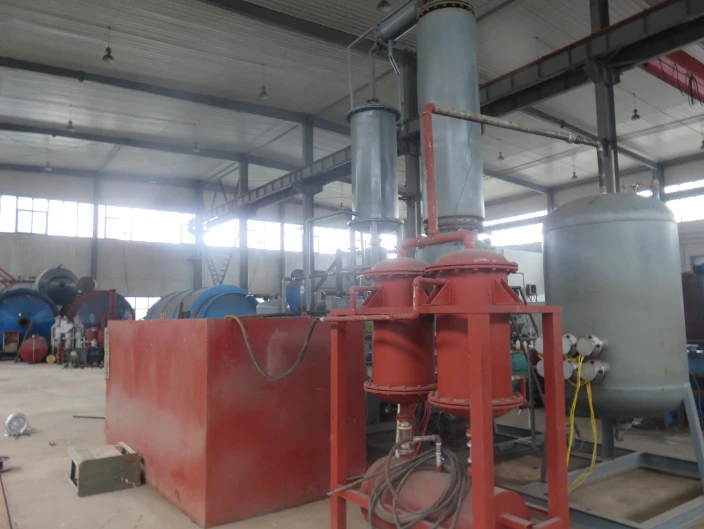
The Features of the machine
Our Waste Engine Oil Recycling to Diesel Machine is different from other companies' refining machines, more environmentally friendly, and more economically efficient.
There is no need for acid washing or alkali washing, avoiding the acid and alkali oil washing process of acid and alkali pollution of the environment.
The use of a preheating system, which uses flue gas waste heat to heat the preheating tank, saves fuel and speeds up distillation.
Using both gas catalysis and liquid catalysis, it is possible to obtain a light yellow diesel product with a bright colour, and the quality of the (beer-coloured) diesel is close to the National IV standard.
The use of indirect heating extends the life of the distillation furnace.
Running video of the Waste Engine Oil Recycling To Diesel Machine
About our company
Xinxiang Jinzhen Machinery Equipment Co., Ltd. (Brand: Jinzhen Machinery), established in 2007, is a large-scale manufacturer of eco-friendly renewable energy equipment, integrating R&D, design, manufacturing, sales, and after-sales service. Formerly known as Xinxiang Yulin Machinery Factory, the company successfully developed and launched a continuous, fully enclosed pyrolysis system in 2014.
The company is a large-scale, integrated enterprise specializing in the research of equipment and technology for processing waste engine oil, waste rubber, and waste plastics into fuel. It employs a unique process that utilizes liquid waste oils-such as waste engine oil and waste lubricants-as raw materials to produce non-standard diesel; this process has secured multiple national patents and environmental certifications. The company's proprietary continuous, fully enclosed processing system features fully automated feeding and slag discharge mechanisms. It is characterized by excellent environmental performance, high automation, robust safety, high processing capacity, and ease of operation. Capable of 24-hour continuous production, the system effectively eliminates the drawbacks associated with traditional batch-processing equipment.
Jinzhen Machinery's product portfolio includes equipment for the catalytic distillation of waste engine oil, waste tire pyrolysis, waste plastic processing, and oil sludge treatment. In the waste engine oil processing sector, the company offers single production lines with daily capacities ranging from 4 to 20 tons, providing various production solutions-such as small-batch batch processing and large-scale continuous processing-tailored to specific customer requirements.
F&Q
1. What is the actual oil yield when producing non-standard diesel from waste engine oil?
A: Under normal operating conditions, the oil yield from pure waste engine oil (water content <5%, impurities <3%) ranges from 80% to 90%, averaging around 85%. If the feedstock contains high moisture or excessive additives, the yield will decrease accordingly.
2. Does the production process generate odors or pollution? Will it pass environmental inspections?
A: The entire system operates under a sealed negative-pressure environment. Non-condensable gases generated during distillation are recovered and burned, and the flue is equipped with a desulfurization and dust removal tower. The small amount of waste bleaching earth produced during refining can be used as raw material for building materials. The process achieves essentially zero wastewater discharge and fully complies with domestic environmental regulations.
3. Is the equipment difficult to operate? How many personnel are required?
A: The equipment features PLC-based automatic temperature and liquid level control. Daily operation requires only 1–2 workers, primarily for feeding, routine inspections, and slag discharge. The manufacturer provides detailed operation manuals and on-site training.
4. How should the heating method be selected? Which is the most cost-effective?
A: If a natural gas pipeline is available locally, gas heating is the preferred choice; coal heating is an option if coal prices are low; if environmental regulations are strict, electric heating with thermal oil is recommended (higher operating costs but cleaner). We can provide a cost comparison plan based on your local energy prices.
5. What is the lifespan of the catalyst? Is the replacement cost high?
A: Solid catalysts generally last 6–12 months; once deactivated, they can be regenerated in-situ or replaced. Replacement costs amount to approximately 3%–5% of the total equipment investment, depending on the processing capacity.
6. What is the service life of the equipment? Is maintenance complex?
A: The distillation kettle is made of alloy steel and has a service life of 8–10 years under normal use. Routine maintenance-such as cleaning condenser tube walls, replacing filter elements, and checking vacuum pump oil levels-is simple and required only once a month.
Hot Tags: waste engine oil recycling to diesel machine, China waste engine oil recycling to diesel machine manufacturers, suppliers, factory


