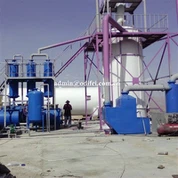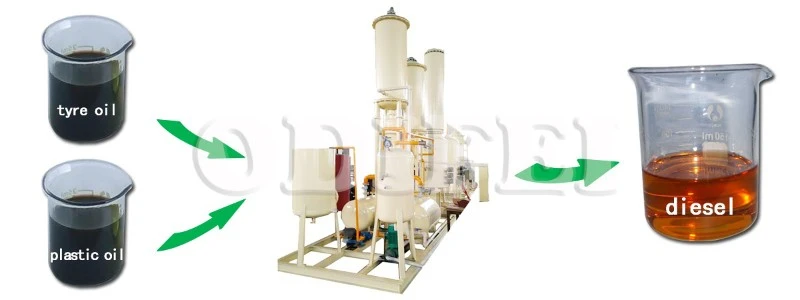
The Waste Oil to Diesel Fuel Machine is a high-efficiency, environmentally friendly, and energy-saving waste oil treatment equipment that converts waste oils such as waste engine oil, crude oil, and pyrolysis oil into non-standard diesel fuel. This advanced distillation and catalytic refining system transforms environmentally hazardous waste oils into valuable energy products, delivering both significant environmental benefits and substantial economic returns.
Working Principle
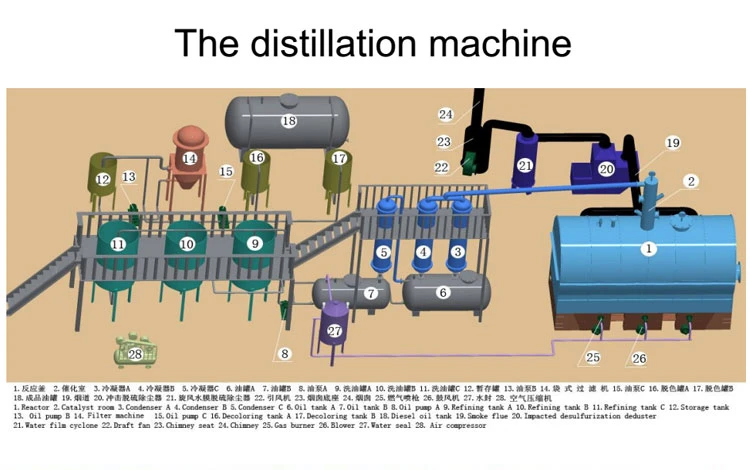
The equipment operates on the fundamental principle of boiling point differences among various hydrocarbon components in waste oil. Under vacuum heating conditions, different fractions are vaporized sequentially, then condensed and collected. The process is further enhanced by catalytic cracking, which breaks long-chain hydrocarbon molecules into shorter chains suitable for diesel combustion. The complete process consists of the following steps:
Step 1: Thermal Oil Circulation Pre-heating
Start the thermal oil furnace to circulate thermal oil through the entire system, pre-heating the distillation reactor, catalytic tower, and decolorization system for subsequent use.
Step 2: Distillation and Impurity Removal
The waste oil is pumped into the refining reactor. The burner heats the reactor while the thermal oil system provides indirect heating-a dual heating system that enables rapid temperature rise and efficient continuous heating.
Step 3: Catalytic Cracking
The distilled oil vapors rise into the catalytic tower, which contains multi-layer ceramic balls and catalyst structures. As the vapors pass through and fully contact the catalyst, catalytic reactions occur, converting the waste oil into non-standard diesel. The catalysts used can be solid, liquid, or gas phase, replacing traditional acid-alkali washing-safer, more environmentally friendly, and the catalysts are reusable, offering significant economic advantages.
Step 4: Condensation and Collection
The catalytically converted oil vapors enter the multi-stage condensation system. Cooling water circulates outside the condenser tubes while oil vapors flow inside, achieving efficient heat exchange and liquefaction.
Step 5: Decolorization and Purification
Step 6: By-product Discharge and Treatment
Asphalt/Bitumen: Residue in the distillation reactor is automatically discharged through the bottom outlet due to gravity
Non-condensable gas: Uncondensable combustible gases are treated through water seals and desulfurization towers, then returned to the reactor as fuel for heating, saving energy. Flue gases are purified through spray towers before emission.
Application of the Waste Oil To Diesel Fuel Machine
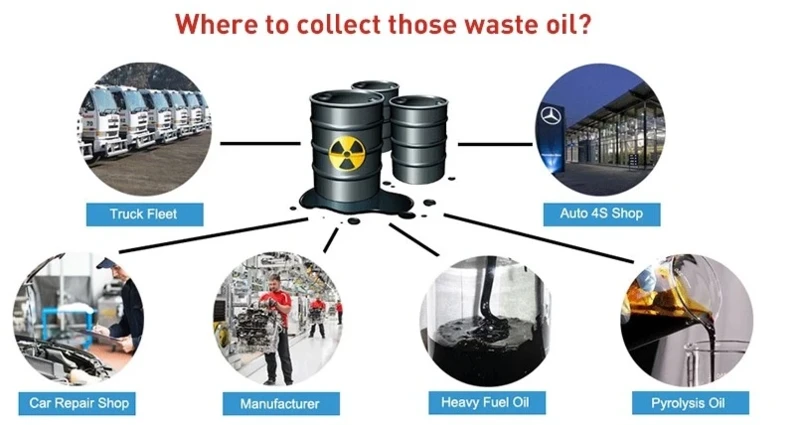
Raw materials: waste motor oil, tire oil, plastic oil, marine oil, waste industrial oil, pyrolysis oil, waste diesel, waste engine oil.
Final product: diesel, light oil, heavy oil, exhaust gas (can be reused in the process);
Daily processing capacity: 3-200 tons/day;
Working mode: PLC system runs continuously for 24 hours;
Technical Parameter
|
No |
Item |
Content |
||||
|
1 |
Model |
JZJL-5 |
JZJL-10 |
JZJL-20 |
JZJL-30 |
JZJL-50 |
|
2 |
Raw material |
crude oil/waste engine oil/heavy oil/tire oil/plastic oil/fuel oil |
crude oil/waste engine oil/heavy oil/tire oil/plastic oil/fuel oil |
|||
|
3 |
Structure |
horizontal |
||||
|
4 |
Capacity |
5T/D |
10T/D |
20T/D |
30T/D |
50T/D |
|
5 |
Oil yield |
70~80% |
||||
|
6 |
Working pressure |
Native pressure/vacuum |
||||
|
7 |
Power |
35kw |
40kw |
50kw |
75kw |
90kw |
|
8 |
Cooling system |
water cooling |
||||
|
9 |
Heating mode |
Directly heating |
||||
|
11 |
Installation |
Have basis |
||||
|
12 |
Noise DB (A) |
≤85 |
||||
|
13 |
Area(M*M) |
L10*W5 |
L15*W5 |
L30*W8 |
L50*W10 |
L80*W15 |
|
14 |
Working form |
Semi Continuous |
Continuous operation |
|||
Features
(1) The operation cost is low, and the non-condensable gas generated in operation can be used as fuel.
(2) The equipment is easy to operate with low labor intensity. Only 1 worker/shift is required.
(3) Process and distill various waste oils, such as waste diesel oil, waste engine oil, various waste engine oil, waste plastic oil, tire oil, etc.
(4) The product oil is of high quality, and the cracked diesel oil can be used in industry, civil use, and even diesel engines.
(5) Good environmental protection effect. The equipment will not produce waste smoke, waste water, etc. during operation.
(6) High oil yield, up to 75% - 90% (based on the oil content of raw oil)
Profit Analysis
|
Profit analysis 30Tons waste engine oil |
|||
|
Input |
Unit |
Price |
Total |
|
Waste engine oil |
30Tons |
300$/Ton |
9000$ |
|
Power |
60KW*24*0.6 |
0.12$/h |
103$ |
|
Labors |
4 as 2 shifts |
50$/person |
200$ |
|
Catalyst |
|
10$ |
30$ |
|
Fuel |
Light oil or heavy oil as fuel |
|
|
|
Total |
|
|
9600$ around |
|
Output |
Unit |
Price |
Total |
|
Diesel |
70%*30Tons |
650$/Ton |
13650$ |
|
Light oil |
For heating |
|
|
|
Heavy oil |
10%*30Tons |
100$/Ton |
300$ |
|
Total |
|
|
13950$ |
|
Profit per day |
|
|
4337$ |
Advantages
(1) Rapid heating: Adopt oil heating + gas heating + electric heating technology; the heating speed is fast, saving time and electricity
(2) Precise temperature control: The computer automatically controls the temperature rise; the temperature control is accurate, the temperature rises evenly, and the quality of the refined oil is effectively improved.
(3) Green environmental protection: Water dust removal + activated carbon adsorption box is adopted, which meets the national environmental protection requirements. No "three wastes", no waste gas, no waste water, no waste residue.
(4) Filtration, decolorization and deodorization can be completed at one time. Through the combination of high temperature, liquid catalysis and gaseous catalysis, oil products can achieve deep desulfurization, degumming, impurity removal and other purification purposes. question.
(5) The use of non-condensable gas can save 60% of fuel and significantly reduce production costs
(6) From 1 to 100 tons, the plan can be designed according to the processing capacity, and the investment is more flexible.
FAQ
1: Is the production process environmentally friendly? Any pollution?
A: Yes, the equipment operates in a fully enclosed system with no odor leakage during production. All by-products are treated:
Non-condensable gas is recovered and reused as fuel
Flue gas is treated through desulfurization and dust removal systems
Zero wastewater discharge (circulating water cooling system)
Waste residue (asphalt) can be used for road paving or as industrial fuel
2: How many workers are needed to operate the equipment?
A: Only 1–2 workers per shift are required for daily operation and monitoring. The equipment features an intelligent control system for automated production, reducing labor intensity.
3: What heating options are available?
A: The equipment uses a dual heating system: thermal oil furnace (indirect heating) + burner (direct heating). The burner can be configured for coal, fuel oil, or natural gas depending on local energy availability and cost considerations.
4: How long do the catalysts last? What is the replacement cost?
A: Solid catalysts are reusable and regenerable. Under normal operation, catalysts can last 6–12 months before requiring regeneration or replacement. Replacement cost is approximately 3–5% of the total equipment investment, depending on processing capacity.
5: What is the equipment's service life? How complex is maintenance?
A: The distillation reactor is made of high-quality boiler plate/stainless steel (Q345R/Q245R/310S) with thickness of 14–18mm. Under normal use, the equipment has a service life of 8–10 years. Daily maintenance includes: cleaning condenser tubes, replacing filter elements, checking vacuum pump oil levels, and inspecting seals-typically performed monthly and relatively simple.
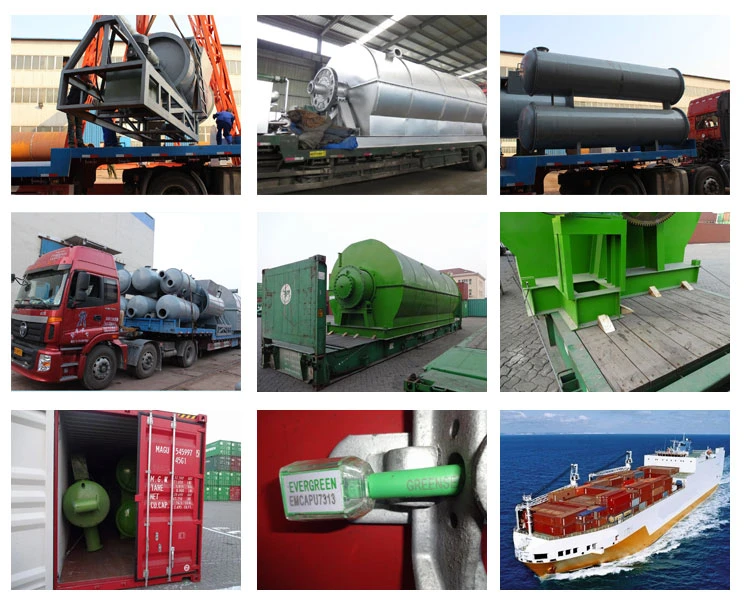
Delivery
Delivery time
Within 20-50days after receiving the advance payment.
Port (China)
Qingdao port & Shanghai port
Warranty and machine life
We guarantee the complete machine for 2 years; the reactor life is more than 4 years, and other parts do not need to be changed lifelong except the wearing parts.
Hot Tags: waste oil to diesel fuel machine, China waste oil to diesel fuel machine manufacturers, suppliers, factory