


Introduction of waste oil to a diesel refinery
A waste oil to diesel refinery is an eco-friendly industrial system that converts various types of waste oils-such as used lubricating oil, waste engine oil, and oils derived from waste tires or plastics-into diesel fuel through processes like catalytic cracking and high-temperature distillation.
Core working principle of waste oil to diesel refinery
The waste oil to diesel refining process is primarily based on two core technologies: thermal cracking and fractional distillation.
Thermal cracking: Waste oil is heated to high temperatures (typically 360–410°C) to break down long-chain hydrocarbon molecules into short-chain molecules.
Fractional distillation: Based on the principle that different hydrocarbons have different boiling points, various fractions are separated by controlling the temperature.
Complete process flow
Complete Process Flow
The typical process flow for refining diesel from waste engine oil is as follows:
Step 1: Pre-treatment
Remove bottom water from the collected waste oil using a water separator.
Remove impurities through filtration.
Step 2: Dehydration
Employ methods such as static settling, adsorption, or heating to remove water.
Step 3: Catalytic Cracking
Add a catalyst to the dehydrated waste oil in the required proportion.
Pump the mixture into a refining reactor and heat to the operating temperature.
The waste oil vaporizes at high temperatures, and the oil vapors pass through a catalytic chamber for the catalytic reaction.
Step 4: Condensation and Fractionation
The oil vapors enter a condenser to cool down.
By controlling the temperature (above 150°C), diesel is condensed and collected first.
Components with different boiling points are separated through staged condensation.
Step 5: Refining and Purification
Refine the product through steps such as decolorization and filtration.
The final result is a diesel product with a clear appearance and high calorific value.
Step 6: Tail Gas Treatment
Recover non-condensable combustible gases and feed them into the furnace for combustion.
Achieve environmental protection and energy conservation.
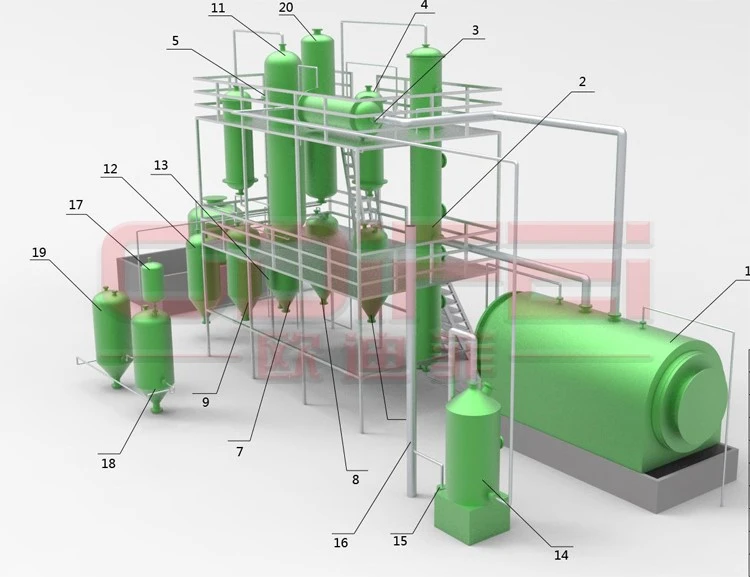
Main Part List
|
Item |
Function |
|
Distillation reactor |
The waste oil will be pumped into the reactor for refining. |
|
Distillation column |
Atmospheric Fractionator: Ensures different fractions come out. |
|
Condensing device |
The oil gas will be cooled to liquid oil, then flow to the oil storage tank. |
|
Vacuum pump |
Ensures the distillation machine works under normal pressure. |
|
Anti-backfire device |
Safety device, prevents the oil gas from reverting to the reactor. |
|
Non-condensable oil gas recycling system |
The non-condensed oil gas (Syngas ) will be recycled to the heating system as fuel. |
|
Color and smell removal system |
The last step to remove bad smell and color from yellow diesel oil. |
|
Dedust system |
3 layers of ceramic packing dedusting to remove dust and acidity, non-polluting. |
|
Safety devices |
Auto-releasing pressure device, alarm, safety valve, etc to ensure safe operation. |
Raw Materials
This equipment can process a wide range of raw materials:
Waste engine oil/waste lubricating oil: diesel engine oil, gasoline engine oil, gear oil, hydraulic oil, etc.
Waste tire pyrolysis oil
Waste plastic pyrolysis oil
Crude oil/heavy oil/residual oil
Crude oil/fuel oil
Oil sludge/marine fuel oil
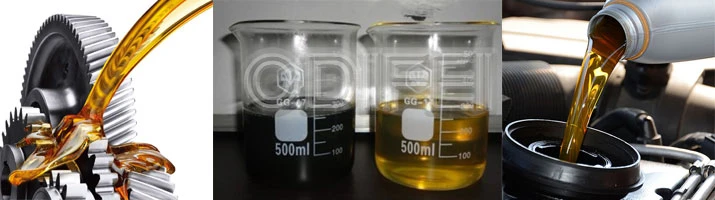
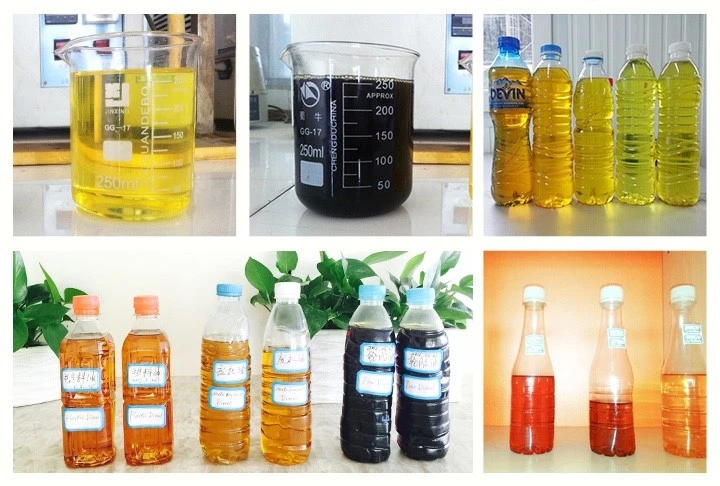
End Product
Diesel (85%–90%): Used for tractors, trucks, ships, diesel generator sets, etc.
Residue (approx. 5%): Used as fuel to heat the reaction vessel.
Combustible gas (approx. 5%): Can be used to heat the furnace or be liquefied for storage.
Equipment Features and Advantages
1. Technical Features
Closed-system production: The entire system operates in a sealed environment, ensuring a safe and controllable production process.
Safety protection: Equipped with multiple safety devices to effectively prevent the risk of flashback explosions.
Excellent sealing: Furnace connections utilize precision machining and coil-molding techniques combined with graphite seals to effectively prevent gas leakage.
2. Operational Advantages
Ease of operation: Requires only 1–2 operators.
Low cost: Additive costs are approximately 200 RMB per ton of waste engine oil processed.
Flexible operation: Supports a choice between batch (intermittent) and continuous operation modes based on requirements.
3. Environmental Advantages
No secondary pollution: Certain advanced configurations achieve 100% environmental compliance, leaving no waste residue requiring disposal.
Tail gas recovery: Tail gas is routed through a recovery system back into the furnace for combustion.
Energy conservation and emission reduction: Classified as a project that promotes energy conservation, emission reduction, and comprehensive resource utilization.
Common models and technical parameters
| Model | daily capacity | power | Operation Method |
| JZJL-5T | 5tons | 20kw | batch type |
| JZJL-10T | 10tons | 36kw | batch type |
| JZJL-15T | 15tons | 36kw | batch type |
| Operating temperature: up to 410°C | |||
| Operating pressure: Atmospheric pressure | |||
| Voltage: 380V 3P 50Hz or customized | |||
| Heating fuels: coal, wood, charcoal, natural gas, or fuel oil. | |||
| Condensing method: Water-cooled | |||
FAQ
1. What is the payback period for the waste oil to diesel refinery investment?
Small-scale equipment requires a lower initial investment, offers high returns, and allows for a relatively quick payback, making it ideal for individuals and small-to-medium-sized enterprises. The specific payback period depends on factors such as raw material supply, local oil prices, and processing scale.
2. What are the requirements for raw materials?
The equipment can process various types of waste oil, though oil yield and product quality will vary depending on the specific feedstock. It is recommended to verify the suitability of specific raw material types and the expected oil yield with the manufacturer before purchasing.
4. Do the waste oil to diesel refinery's emissions meet environmental standards?
Equipment from reputable manufacturers ensures that emissions of waste gas, wastewater, and solid waste comply with national environmental standards. When purchasing, you should request proof of compliance and relevant test reports from the manufacturer.
5. How is after-sales service guaranteed?
It is advisable to choose a manufacturer that provides installation guidance, commissioning, operational training, a comprehensive equipment warranty, and lifetime technical support.
Success case
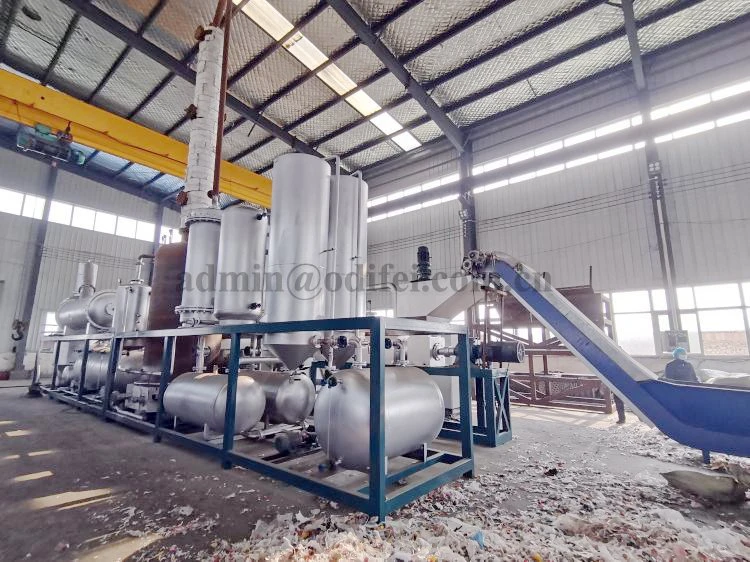

Hot Tags: waste oil to diesel refinery, China waste oil to diesel refinery manufacturers, suppliers, factory


