


How to use and maintain one set of bucket elevators?
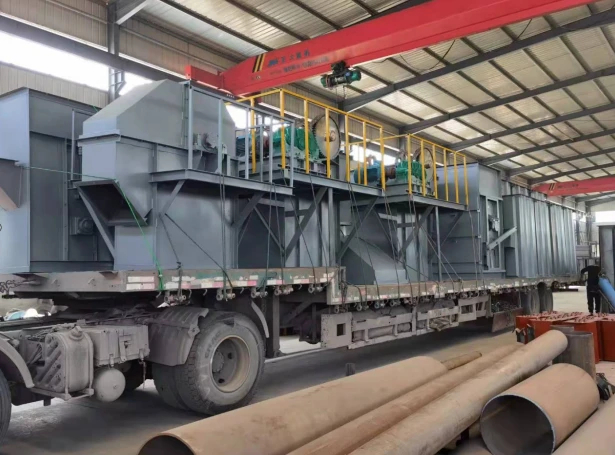
A bucket elevator is a type of continuous conveying machinery specifically designed for vertical or steeply inclined conveying of powdery, granular, and small lump materials.
Feed particle size: Customizable according to customer requirements
Processing capacity: Customizable according to customer requirements
Bucket Elevator Applications: Ports, steel mills, cement plants, mines, chemical plants, fly ash treatment, new energy, desulfurization and denitrification, metallurgy, etc.
When you use the bucket elevator
(1) The bucket elevator should be started with no load, and pay attention to any abnormal sounds.
(2) After 2-5 minutes of no-load operation, start feeding continuously and evenly to the feeding port of the elevator, but the conveying volume cannot exceed the design requirements.
(3) After 100-200 hours of production, all fasteners of the hoist must be checked, especially the condition of the nut, and the lubrication condition must be checked at the same time.
(4) During the operation of the hoist. Various adjustments are not allowed.
(5) All inspection doors should be closed during operation, and lighting devices should be installed near frequently used inspection doors.
(6) The working conditions of the head and tail should be checked frequently during use.
(7) Stop the machine after all the materials in the hopper are unloaded.
how to maintain the bucket elevator?
(1) Clean up the residual material at the tail before starting the bucket elevator.
(2) According to their own situation, users should have at least one comprehensive inspection every year to ensure normal production.
(3) The electrical equipment (including the electric control cabinet and material level indicator) must be checked regularly, at least once every 720 hours of production;
(4) The lubricating oil is carried out according to the table below;
(5) When the lowest point of the current bearing slip is close to the red line of the slide rail, immediately check whether the plate chain has reached the extension limit and deal with it in time.
Matters Needing Attention In The No-Load Test Machine
1. Pay attention to the operation of the hopper, traction chain, and sprocket. The running part must not collide with other fixed parts or get stuck. The two chains should run in the same way, and the hopper is not allowed to be skewed.
2. Whether the oil temperature of each bearing is normal (after 2 hours of operation, the temperature should not be greater than 60°), whether the lubrication and sealing are good.
3. Whether the accelerator has excessive noise, whether there is oil leakage, whether the coupling is reliable, and whether the electrical control is normal. No-load power should not exceed 35% of rated power.
4. Carefully observe the backstop device to see if it is reliably disengaged and engaged during operation.
5. Whether all the fasteners are loose, pay special attention to the tightening of the fixing bolts between the hopper and the chain after parking.
After the no-load test machine is completed and deemed satisfactory, a 16-hour load test should be carried out; that is, the operation should be carried out under the conditions of the originally designed lifting amount and lifting materials.
