


Waste tire pyrolysis is an effective resource recovery technology that can convert waste tires into useful fuels. Heating is a key step in this process because it helps to decompose waste into usable products. There are two common heating methods: direct heating and indirect heating.
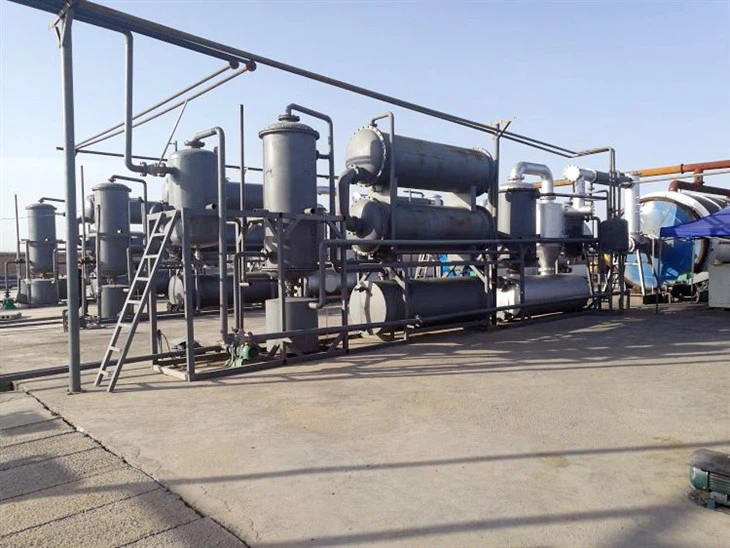
Direct heating refers to the direct exposure of waste tires to high temperatures to decompose and convert them into oil and gas. The commonly used equipment for this heating method is a furnace. The waste tires are placed in a furnace and then heated to a high temperature. During this process, the waste tires undergo a pyrolysis reaction to produce oil and gas. The oil can then be collected and extracted by condensation separation. Direct heating pyrolysis equipment is simple to operate, has a fast heating speed, and is suitable for large-scale production. However, the waste gas and waste residue generated during the combustion process need to be treated to avoid polluting the environment.
Indirect heating refers to the transfer of heat to the waste tires by conduction or convection to heat them up. The commonly used equipment for this heating method is hot air heating or heaters. During the indirect heating process, the waste tires are not directly exposed to high temperatures, but receive heat through the heater surface or conduction medium. This heating method can reduce the waste gas and slag generated during the combustion process, thereby reducing the impact on the environment. In addition, indirect heating can better control the temperature and time of the heating process, thereby obtaining higher quality products. However, indirect heating is slow, relatively complex to operate, and requires more energy.
When choosing a heating method, you need to consider factors such as production scale, operating requirements, and environmental impact to choose the most suitable heating method. We provide you with customized waste treatment design and solutions. For more details, please contact us!
