


What is the differences between batch and continuous waste tire pyrolysis plant?
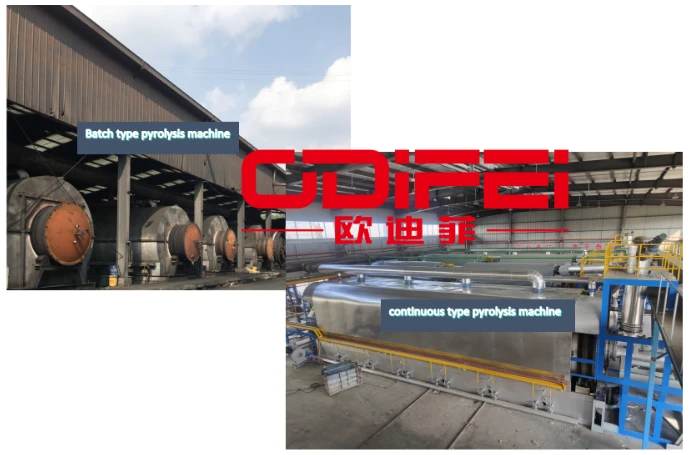
The main differences between batch and continuous waste tire pyrolysis plants lie in their operation mode, efficiency, and processing capacity. Here's a breakdown:
1. Operation Mode
Batch Pyrolysis Plant: Operates in cycles; you need to load, process, cool down, and unload before starting a new batch.
Continuous Pyrolysis Plant: Runs non-stop; raw materials are continuously fed in, and output products are discharged simultaneously.
2. Processing Efficiency
Batch: Requires time to cool down and restart, leading to downtime.
Continuous: Works 24/7, reducing downtime and increasing efficiency.
3. Capacity
Batch: Suitable for small-to-medium-scale production (5-15 tons/day).
Continuous: Designed for large-scale production (20-50+ tons/day).
4. Labor Requirement
Batch: Requires more manual labor for loading, unloading, and monitoring.
Continuous: Automated feeding and discharging reduce labor costs.
5. Heating and Fuel Consumption
Batch: Needs to be reheated for every new batch, increasing fuel usage.
Continuous: Maintains a stable temperature, making it more fuel-efficient.
6. Investment and Cost
Batch: Lower initial investment but higher operational costs.
Continuous: Higher upfront investment but lower long-term operating costs.
7. Environmental Impact
Batch: Emissions can be harder to control due to repeated heating cycles.
Continuous: Better emission control due to stable operation and advanced filtration systems.
Which One Should You Choose?
Batch: Best for startups, small businesses, or those with limited capital.
Continuous: Ideal for large-scale operations and long-term business plans.
We Odifei company provide both batch and continuous waste tire pyrolysis plant with series models for you to choose. Tell us your requirment, then we will give you the most professional suggestions and solutions.
